
Electricians keep our world running—from the lights in your home to the technology that powers modern life. If you’ve ever thought about learning a trade that combines hands-on problem-solving with long-term job security, becoming an electrician could be the perfect path.
Becoming an electrician in 2025 offers one of the most stable and well-paying skilled trades careers in the United States. As of 2025, the field is projected to grow nine percent through 2034, faster than average for all occupations, according to the U.S. Bureau of Labor Statistics.1
This guide will walk you through the essential qualifications, training programs, and online electrician courses to help you start your career.
Key Takeaways
- Electricians are in high demand, offering reliable, well-paying career paths.
- You’ll need a high school diploma or GED and hands-on training through an apprenticeship or trade school program.
- Educational requirements for electricians vary by state and typically include coursework, testing, and hands-on experience.
- Online and hybrid electrician courses help students build foundational knowledge in electrical concepts and safety before committing to a full program.
- Once trained, entry-level electricians can specialize in residential, commercial, or industrial work.
- State licensing, continuing education, and safety certifications are essential for advancing to journeyman or master electrician status.
What You Need to Be an Electrician
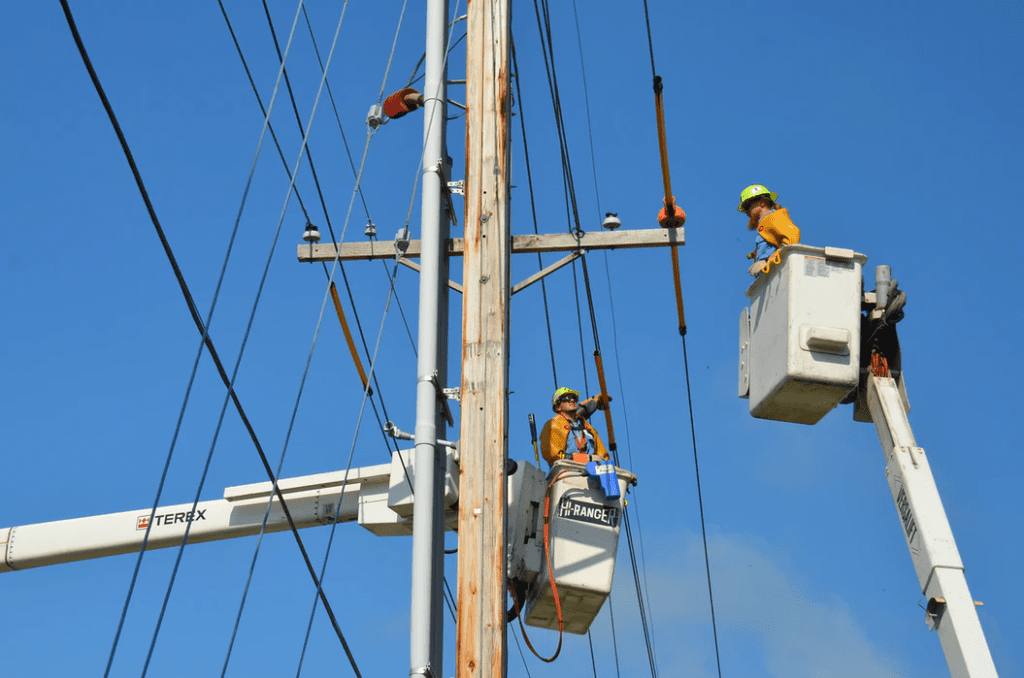
To become a licensed electrician, you’ll need the right education, hands-on experience, and state-approved certification. Each state has its own licensing board that governs requirements for electricians. Most require candidates to complete a specific number of apprenticeship hours and pass a state exam before earning a journeyman or master electrician license. Many states also mandate continuing education to stay current with updates to the National Electric Code.2 Because electricity is essential to virtually every industry, these credentials make electrical technicians one of the most stable, dependable career paths available today.
High School Diploma
A high school diploma or GED is the first step toward becoming an electrician.
High school students can develop skills and strengthen their electrician career prospects by taking STEM and shop-based courses such as physics, algebra, or technical drawing. Many schools now offer Career and Technical Education (CTE) pathways that allow students to take introductory electrician classes or dual-credit trade courses through local community colleges.3 These programs help students gain early exposure to electrical wiring, circuits, and blueprint reading, and may also introduce them to various types of electrical systems and components while still in high school.
Apprenticeship Program
Electrician apprenticeships combine paid work experience with classroom training to help you earn a journeyman license. Apprenticeships are extremely valuable. These are on-the-job electrician training programs that typically last four to five years and require about 8,000 hours of paid hands-on practice annually.1
Apprenticeship programs can be either union or non-union. Union options, such as those offered through the International Brotherhood of Electrical Workers (IBEW) and National Electrical Contractors Association (NECA), typically provide structured training with strong job placement support. Non-union programs may be more flexible or locally managed through independent contractors. Both paths combine paid, hands-on practice with classroom instruction. Students can find verified programs through the U.S. Department of Labor’s Apprenticeship Finder.4
Certificate Programs and Electrician Courses
Certificate programs give aspiring electricians foundational training in electrical systems, safety, and the National Electrical Code. These credentials are great additions to your high school diploma and apprenticeships. They prove that you have a working and up-to-date knowledge of what every journeyman electrician should know about the field. The 2023 National Electrical Code (NEC) remains the current standard for electrical installations in the U.S., although a new standard is expected to be released by January 2026.5
Certificate and continuing education programs also help licensed electricians stay compliant with safety regulations and the latest code updates. Many states require renewal courses every few years to maintain licensure. Modern electrician programs are increasingly hybrid or online, allowing students to complete theory lessons virtually while attending in-person lab sessions for hands-on wiring practice.6
Electrician Courses to Explore
Exploring online electrician courses is a great way to test the field before committing to a full apprenticeship or trade program. These online courses can help students build a solid foundation for electrician careers by providing essential knowledge and practical skills needed to start in the electrical field. Different courses and schools allow you to explore the job’s nuances without fully committing to a job or apprenticeship program.
In 2025, aspiring electricians have more flexibility than ever. Hybrid and online programs let students learn electrical fundamentals, safety, and code theory before committing to an apprenticeship. Platforms like Coursera and Alison even offer low-cost or self-paced introductory classes in basic electrical systems, giving learners a chance to explore the trade before enrolling in a full program.7,8
Online Electrician Training from Penn Foster
Penn Foster’s online electrician training program offers flexible, self-paced instruction aligned with industry standards.9 It remains active in 2025 under the Residential Electrician Career Diploma.
All of Penn Foster’s courses are asynchronous, meaning that you choose when to start and complete your work. It has around-the-clock advisors, career coaches, and other support staff to cater to any need. In Penn Foster’s online electrician training program, you’ll get advice and information straight from electrical experts.
Some of the standout courses in the program are:
- Electrical fundamentals
- Electrical devices
- HVAC systems
- The National Electrical Code
- Conduits, cables, and conductors
- Reading Electrical Drawings, Schematics, and Blueprints
By the end of these various electrician courses, you’ll be at the apprentice level. Penn Foster’s electrician diploma takes around 11 months to complete at your own pace.9
Stratford Career Institute’s Electrician Course
Stratford Career Institute’s Online Electrician Course provides introductory knowledge for those exploring the basics of electrical systems.10 From knowing how to fix simple household circuits to industrial electrical equipment, Stratford wants you to know it all.
Stratford’s online course is a home-study, non-accredited program intended for personal enrichment only.9 Graduates who wish to work professionally as electricians will still need to complete a recognized apprenticeship or trade school program to qualify for certification or state licensing.
Schools Offering Electrician Education Courses
Many trade schools and community colleges offer electrician programs that combine hands-on training with classroom instruction. This is a fantastic resource to look up schools that offer electrician courses near you.
Prospective students can use the National Center for Education Statistics (NCES) College Navigator or the Apprenticeship.gov database to find accredited electrician schools in their state.11,4 Community colleges such as Los Angeles Trade-Technical College and Lincoln Tech also offer in-person electrician associate degrees and certificates.12,13 When searching, verify that your chosen school is approved by your state’s licensing board and provides hands-on lab components.
Each U.S. state sets its own licensing standards for electricians, typically requiring a mix of education hours, on-the-job training, and an exam. Journeyman licenses generally require 6,000–8,000 work hours and classroom instruction, while master electricians must demonstrate additional experience and knowledge.14 State electrical boards, often listed through local departments of labor or professional regulation, maintain searchable directories for license applications and renewals.2
Start Your Career: How to Make the Most of Electrician Courses
After completing electrician training, you can apply for apprenticeships, gain licensure, and explore specialized electrical careers. Once you complete a few electrician courses, you’ll have a better idea of what the field can offer you. You can master everything from electrical wiring and electrical theory to the National Electric Code.
The median annual salary for electricians was $62,350 in May 2024, according to the U.S. Bureau of Labor Statistics.1 If you like what you have learned in different electrical courses, you can pursue your state license as an electrician and make it official.
After finishing training, electricians can specialize in residential wiring, commercial systems, industrial maintenance, or power-line installation. These specializations differ in scope, pay, and safety requirements. Residential electricians often focus on home installations, while industrial electricians handle large-scale systems in factories. Each career track offers long-term advancement to master electrician or electrical contractor roles.
Electrician Career Path and Salary Comparison Table
Electrician salaries vary by specialization, with strong earnings potential across residential, commercial, and industrial sectors.
| Specialization | Typical Work Setting | Median Annual Salary (Oct 2025 est.) |
|---|---|---|
| Residential Electrician | Homes, apartments | $59,752 |
| Commercial Electrician | Offices, retail, institutions | $54,034 |
| Industrial Electrician | Factories, plants | $61,635 |
| Electrical Line Installer / Repairer | Utility grids | $49,733 |
Financing Your Electrician Training
Electrician students can fund their training through federal aid, apprenticeships, or employer sponsorships. Accredited electrician programs qualify for FAFSA and federal student aid, including Pell Grants and loans.19 Apprenticeships are often paid, allowing you to earn while you learn. Veterans may also use GI Bill benefits for accredited trade schools.

"Career Karma entered my life when I needed it most and quickly helped me match with a bootcamp. Two months after graduating, I found my dream job that aligned with my values and goals in life!"
Venus, Software Engineer at Rockbot
Future Tech in Electrical Work (2025 and Beyond)
Modern electricians work with cutting-edge technologies like smart homes, solar systems, and electric vehicle charging networks. Employment in solar installation and EV infrastructure is expected to grow much faster than average—roughly 42 percent through 2034.20 The electrician field continues to evolve with new technology, and understanding solar integration, energy storage, and AI-driven building automation can position you for cutting-edge roles in sustainable energy and green construction.
Sources:
1 https://www.bls.gov/ooh/construction-and-extraction/electricians.htm
2 https://www.necanet.org/topics/codesandstandards/the-nec
4 https://www.apprenticeship.gov/
6 https://www.trade-schools.net/online/
8 https://alison.com/tag/electrician-apprenticeships
9 https://www.pennfoster.edu/programs/trades/residential-electrician-career-diploma
10 https://www.scitraining.com/electrician
11 https://nces.ed.gov/collegenavigator/
12 https://www.lattc.edu/academics/aos/electrical-construction-and-maintenance
13 https://www.lincolntech.edu/careers/skilled-trades/electrical
14 https://www.ultimateelectriciansguide.com/electrical-license-requirements-by-state/
15 https://www.ziprecruiter.com/Salaries/Residential-Electrician-Salary#Yearly
16 https://www.ziprecruiter.com/Salaries/Commercial-Electrician-Salary#Yearly
17 https://www.ziprecruiter.com/Salaries/Industrial-Electrician-Salary#Yearly
18 https://www.ziprecruiter.com/Salaries/Electrical-Power-Line-Installers-And-Repairers-Salary#Yearly
19 https://studentaid.gov/understand-aid/types/grants/pell
20 https://www.bls.gov/ooh/construction-and-extraction/solar-photovoltaic-installers.htm
About us: Career Karma is a platform designed to help job seekers find, research, and connect with job training programs to advance their careers. Learn about the CK publication.