
Compare the top HVAC programs in Houston, including length, tuition, night options, EPA 608 prep, job placement, and more.
Methodology
In compiling our list of top Houston-area heating, ventilation, air conditioning (HVAC) schools, we took into account curriculum, exam prep and support, hands-on lab hours, employment partnerships, and schedule flexibility.
Quick Facts: HVAC Training Houston at a Glance
- Typical program lengths will vary based on several factors, including curriculum and format. Most certificate programs take less than one year to complete, while associate of applied science degrees usually take around two years.
- The cost of an HVAC program also spans a wide range, from just a few thousand to more than thirty thousand. This will depend on whether you’re pursuing a certificate or associate degree, as well as the length, curriculum, and location of the course.
- Beyond the base tuition, prospective students should also take into consideration the cost of air conditioning and refrigeration equipment as well as additional certifications such as EPA 608, OSHA 10, and more.
- To accommodate a variety of schedules, many school offer several flexible timelines including daytime, nighttime, and weekend.
Top HVAC Programs in Houston, TX (Unranked)
Excellent Trade Training of HVAC
From customer service to HVAC/R and everything in between, ETT offers small class sizes that focus on practical, real-world training for their students.
Credentials: Certifications
Length: Five weeks
Costs: $1,850
Lab setup: Hands-on class work
EPA 608 support: EPA prep materials provided
Externship/placement: N/A
Formats: Part-time night classes
Houston Trade Training
This program aims to prepare students for a career in the world of residential or commercial climate control, through the principals and practices of HVAC maintenance, repair, installation, as well as hazard and safety practices.
Credentials: Certifications
Length: Two months or less
Costs: $1,999
Lab setup: Contact school to learn more
EPA 608 support: EPA certification prep included in curriculum
Externship/placement: Contact school to learn more
Formats: Part-time day classes
Lincoln Tech
Since the opening of their first location in Newark, NJ in 1946, Lincoln Tech has been providing HVAC training to thousands of students at campuses across the United States. Some courses are even available online to help accommodate a range of schedules.
Credentials: Associate diploma
Length: 52–77 weeks
Costs: $514–$595/credit hour
Lab setup: Several hours of lab work in addition to lectures for each program unit
EPA 608 support: EPA certification prep included
Externship/placement: Job placement assistance and an opportunity to apply to a specialized Hussmann partnership program
Formats: Daytime, afternoon, and evening classes
The Training Center of Air Conditioning & Heating
With instructors who have over 40 years of experience in the industry, and 18 years teaching HVAC skills, The Training Center of Air Conditioning & Heating aims to mimic real-world experiences and includes text books, lab materials, EPA testing, and starter tools in the tuition cost.
Credentials: Certifications
Length: 10 weeks
Costs: $6,000
Lab setup: Class instruction followed by practical workroom examples
EPA 608 support: EPA testing included
Externship/placement: Placement assistance provided through partner network
Formats: Part-time morning, part-time evening
Texas Technical Trade School
Boasting small class sizes and more than 35 industry partnerships, Texas Technical Trade School offers 200 hours of class time, divided between lectures and lab work.
Credentials: Certification
Length: 12 weeks
Costs: Contact school
Lab setup: 117 hours of lab work
EPA 608 support: EPA prep included in curriculum
Externship/placement: Job assistance including workshops and industry connections
Formats: Nighttime, Monday–Thursday
How to Choose an HVAC Training Center in Houston
Access to hands-on training
Maintaining cooling and heating systems is hands-on work, so it’s important to ensure that you’ll have access to labs and simulators for practical training. Take a look at each school’s syllabus to note how much time you’ll be given to actually work on subjects like troubleshooting issues, using measuring instruments, and more.
Safety
One of the most critical aspects of your education is safety. The best certificate and applied science degrees prepare help their students learn proper installation, maintenance, and repair procedures to ensure the safety of their work, and some provide an opportunity to gain an OSHA 10 or 30 certification.
Soft skills training
There’s more to being in an HVAC program than learning the basic components of tech and safety from industry experts. Most curricula will also include soft skills, such as customer relations, communication, organization, and more.
Employer ties
Many career schools across the U.S. have relationships with one or more local businesses to help their graduates connect with local businesses and land entry-level employment. Take a look to see if your prospective schools work with any hiring partners, as well as if these companies are ones you would want to be employed by.
Schedule
While some are able to commit to a full-time program, or even a 2-year associate degree, others may have existing work or family obligations that require a more flexible schedule or prefer a short-term course that will get them in the workforce quicker. When researching schools, think about if you’d rather enroll in a full-time course over a shorter period of time, or a part-time course that spans a longer period.
Texas HVAC Technician and Contractor Requirements
- Texas Department of Licensing and Registration (TLDR). The TDLR is responsible for overseeing license applications, management, and renewals. In order to work as a licensed HVAC contractor or technician, you must pass an examination through this department.
- Contractor vs. technicians. There will also be distinct requirements for contractors and technicians. To work as a technician, who is overseen by a contractor, you must be at least 16 years of age and submit your application. For a contractor’s license, you must have at least 48 months of practical experience under the supervision of a licensed contractor or have held a technician certification for the past 12 months with at least 36 months of experience within the past two years.
- EPA 608 certification. Under Section 608 of the Clean Air Act, HVAC technicians who are responsible for installing, maintaining, repairing, or disposing of equipment that could release ozone-depleting refrigerants into the atmosphere must obtain an EPA 608 certification.
How to Pay for HVAC School
The cost of attending an HVAC school in Texas can vary widely, with a range of less than two thousand dollars to more than thirty thousand depending on location, school, certification/degree, and length.1 In addition to this, prospective students may also need to factor in the costs of tools, exam fees, and licensing, if it’s not included in the base tuition. Luckily, most schools also provide multiple payment options to help ease the cost.
- Workforce grants. You may also want to look into government-sponsored programs that provide grants for technical training schools, covering partial or full tuition. Contact your school to learn if they’re eligible for any of these grants.
- Employer sponsorships. Through an employer sponsorship, a company will pay all or part of a student’s tuition, in exchange for that student agreeing to work for them for a certain amount of time after their training. You’ll want to keep in mind that, if you leave employment before the required timeline, you will typically be required to pay back the tuition that the employer covered.
- Federal financial aid. Depending on the type of program you’re attending, you may be able to apply for federal student loans. To find out if your school qualifies, reach out to the admissions office or search for institutions on the Federal Student Aid website.
- Private loans. While not all HVAC schools offer federal student loans, they may provide private loan options. It’s important to remember, though, that should you choose this route, you’ll likely end up paying more in interest payments, and your credit score may be affected.
HVAC Careers in Houston
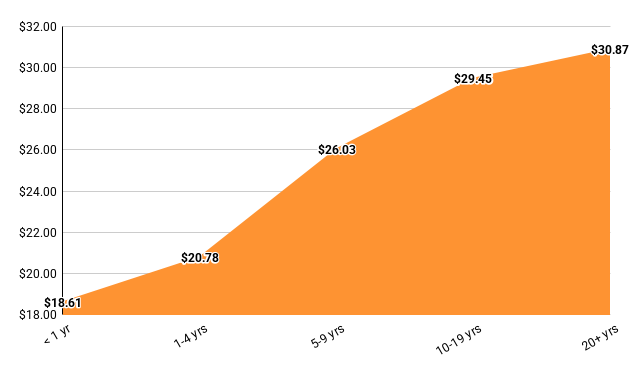
According to the Bureau of Labor Statistics (BLS), working as a skilled HVAC technician continues to stay an in-demand career, as they project an 8% job growth rate through 2034 (“much faster” than the national average across all occupations of 3%).2 They also put the median annual salary at $59,810.3 The Houston area in particular has the ninth-highest number of HVAC jobs, with an employment number of 7,000.4 So it’s no wonder that aspiring HVAC professionals can be drawn to this city, with its large residential and commercial real estate markets, as well as petrochemical and industrial plants that require constant temperature control.HVAC techs can also look forward to consistent salary growth throughout their careers, from those with less than one year of experience to those with more than 20. Payscale maps out the average salary by experience, with their data showing entry-level salaries at $18.61/hour and late-career salaries at $30.87/hour.5 For those looking for hands-on work in a rewarding career, becoming an HVAC installer and maintenance worker could be the path for you.
Entry-Level Jobs Options
- HVAC apprentice
- HVAC technician
- HVAC service technician
- HVAC junior mechanic
FAQs
How long does it take to become job-ready as an HVAC tech?
Depending on the school, your program can be completed in as little as two weeks or two years. You must then pass any necessary licensing or certification exams.
Do I need a license or just EPA 608?
Any HVAC professional who handles equipment that could release ozone-depleting refrigerants as well as most substitute refrigerants are required under Section 608 of the Clean Air Act to pass an exam and receive their EPA 608 certification. Those who do not handle these materials need only receive their license.
Are night programs available?
Yes, many programs have night and weekend programs available. Reach out to your prospective school to learn more about what they offer.
Sources
1https://www.neit.edu/blog/how-much-does-hvac-school-cost
5https://www.payscale.com/research/US/Job=HVAC_Technician/Hourly_Rate