Over the years, as the need for transporting goods across the country has grown, truck drivers have remained consistently in demand, both in rural and urban areas. Because of this, people continue to look to truck driving for a decent income with a lower barrier to entry. In many cases, you first need to obtain your commercial driver’s license (CDL).
In this article, we’ll take a deep dive into a career as a CDL driver, including salaries across the U.S., how you can increase your paycheck, and the career outlook you can look forward to as a professional truck driver.
How Much Does a Truck Driver Make?
According to the Bureau of Labor Statistics (BLS), the median annual salary for heavy and tractor-trailer truck drivers is $57,440.1 However, drivers are typically paid based on how many miles they have driven, plus bonuses, and the per-mile rate can vary widely depending on the employer, the type of vehicle and cargo, the region, and the experience of the driver. The lowest 10% of salaries is less than $38,640, while the highest 10% is more than $78,800.
CDL Driver Salary by State
This range is influenced by a number of factors, most notably where you live. Due to supply and demand across different areas, state regulations, union presence, the cost of living, and more, the state in which you reside can have a large impact on how much you make. Below, we take a look at the highest-paying and lowest-paying states, with salary data gathered from the BLS’s Occupational Employment and Wage Statistics Map as of November 2025.2
Highest-Paying States
| State | Median Salary |
| Alaska | $64,890 |
| New Jersey | $64,720 |
| Washington | $63,760 |
| District of Columbia | $63,610 |
| Oregon | $61,180 |
Lowest-Paying States
| State | Median Salary |
| North Carolina | $49,580 |
| Arkansas | $49,520 |
| West Virginia | $49,040 |
| Louisiana | $48,770 |
| New Mexico | $48,360 |
Salary by Trucking Jobs
Beyond where you live, the type of driving you do also affects how much you can expect to make. For example:
- Over-the-road (OTR) drivers typically make more than regional drivers, who in turn make more than local drivers. This is because OTR drivers take long-haul routes, meaning they could be on the road for days or even weeks as they cross multiple state lines. On the other hand, regional drivers will stick to one region of the U.S., such as the midwest or northeast, and local drivers will remain even more centralized, focusing instead on a group of cities or towns. Since how long you drive has a considerable effect on your lifestyle and the amount of time you’re able to spend at home, you’ll want to carefully weigh both how much you want to earn and the work-life balance you need.
- Different types of vehicles require different skills, which often means a higher or lower salary. While some may just involve transporting simple materials, some may require specialized training to handle. This can include fuel, HAZMAT materials, oversized loads, and more. Flatbed drivers, tanker drivers, and team drivers can also all potential earn better pay
- Depending on your employer, you may have not only a higher salary but also additional benefits like healthcare, paid time off, bonuses, and more. Big companies may have more resources they’re able to offer you, in addition to a steadier flow of income. Independent contractors, on the other hand, are paid on a different time scale. These drivers typically work on a case-by-case basis, choosing which loads to run—and with the potential to earn more money. Independent contractors can even choose to become owner-operators, running a business themselves and owning their own equipment.
Salary by Experience
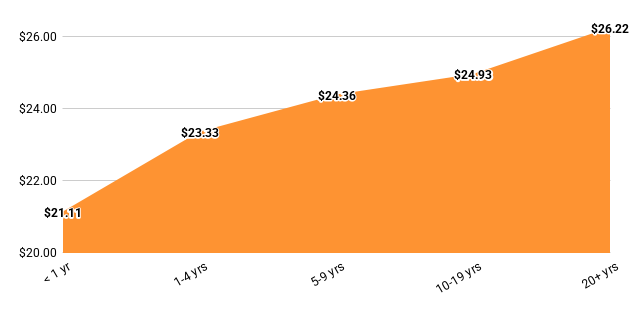
Another major factor that impacts a CDL driver’s salary is how much experience they have in the field. Payscale breaks down the average pay per hour by how many years they’ve been on the job, with a newer driver earning around $21.11/hour.3 By the time a driver reaches 20 or more years in the industry, though, they can expect to bring in on average $26.22/hour.4 Average salaries for commercial truck drivers in the U.S. across various levels of experience can be seen in the chart below, according toPayscale as of November 2025.5
As you gain more experience, however, you might consider starting your own trucking company. While it does come with a significant upfront investment of money, time, and energy, it can also increase your earning potential. In 2025, owner-operators earn an average annual salary of $120,862/year.6
Factors That Influence CDL Driver Salary
There are myriad factors that all come into play when determining a CDL driver’s salary. These include:
Licensing/Endorsements
Obtaining special licenses beyond your CDL can open up a wider range of career opportunities, as certain jobs require proof of specialized training—including a tank vehicle endorsement, which allows you to operate a vehicle with a tank attached to it; a HAZMAT endorsement, which enables you to haul hazardous materials like gas, oil, or dangerous chemicals; a passenger transport endorsement, which shows that you’re permitted to drive a vehicle carrying over a specified number of passengers; and more.. Having these endorsements shows employers that you have valuable skills, making you more high-demand and able to bring in a higher salary.
Hours Worked
Since many truck drivers are paid based on how long they spend driving, adding extra hours will increase your salary. The exact rate, including overtime pay, will depend both on your employer and the type of cargo you’re hauling, and you can also expect bonuses based on all of these factors as well.
Company Size and Benefits
As mentioned earlier, many large companies will give their employees bonuses as part of their compensation package, but that’s not all you can look forward to. You might also have access to health insurance, discounts, per diem allowances for food and other expenses while on the road, and paid lodging when making overnight deliveries.
Regional Demand
The demand for truck drivers, and their median salaries, vary greatly by state and region. In addition to the state salaries noted in the section above, the BLS also lays out the states with the highest and lowest numbers of trucking jobs—the three highest-employing states are Texas (212,700 jobs), California (211,740), and Florida (105,730), while the three lowest are District of Columbia (830), Alaska (3,240), and Rhode Island (3,260).2
Union Membership
Unions work intermediaries between trucking company owners and truck drivers, and they can be a major link in their relationships. While you do have to pay membership fees and abide by union rules, they can also help with wage and benefit increases, ensuring safe practices and procedures, and maintaining job security.
Being an Owner-Operator vs. Contract Driver vs. Company Driver
Whether you’re a contract driver, work for a company, or are an owner-operator will affect not only your salary, but also your risk and stability. While working for yourself often comes with a higher potential salary, there’s also more uncertainty and a bigger investment on your part.
Driving Record
Those sending and receiving deliveries will want to be sure that the person handling them will not only be effective, but also safe. Therefore, those with a clean driving record can expect more jobs and more pay than those with a history of accidents or outdated equipment.
How to Increase Your CDL Truck Driver Pay
As we can see, there are several methods to consider when thinking about how to increase your CDL driver salary:
- Obtain special endorsements, such as HAZMAT or tanker truck drivers, to showcase that you have additional skills that are specialized and in-demand.
- Change from local or regional to OTR. It’s important to remember that this may come with a decrease in work-life balance, though. So if you’d prefer to stay close to home or have more time for yourself, you may prefer local driving—or regional, which is the middle distance of the others.
- Join a union to help with salary negotiations, safety compliances, and more.
- Build experience in the field and seniority at your company.
- Maintain a clean safety record, keeping your equipment up to date, your certifications current, and driving safely while on the road.
- Consider an owner-operator path, which can potentially bring in a much higher salary. However, there are also significantly more risks, as you’re investing more of your time and money into the venture. So when considering whether to be a company driver, a contractor driver, or an owner-operator, think about the potential salary vs. stability, and what balance you’re most comfortable with.
- Negotiate your salary and find a pay structure that works for you, such as cents-per-mile and percentage pay, as well as additional payments like per diem, stop, and detention pay.
Cost and Career Outlook for CDL Drivers
Although becoming a truck driver does involve some investment, the cost is often far outweighed by the pay and the low barriers to entry. First, you’ll want to find a reputable driving school to help you train and prepare for your CDL exam. Depending on which you choose, this can cost between $4,000–$12,000 based on program, location, and specialization.7 Some might even include the cost of the CDL exam and any other necessary fees—which can add up to as much as a few hundred dollars depending on where you live and what licensing you need—as part of the tuition, so you’ll want to make sure you understand everything that’s covered and what you may need to pay outside of the cost of training.
Then, you should consider the ongoing costs of being a CDL driver as you move along in your career. You’ll need to make sure all your licenses are up to date, and should you want to specialize in a particular area, you’ll need additional training and endorsements. Many drivers work for a company who provides equipment, but if you own your own trucks, they’ll need continued maintenance to ensure they’re working properly.
Once you make these investments, though, you can look forward to a career with consistent demand. Thanks to an increasing demand for goods and deliveries, the BLS projects a job growth rate of 4% for heavy and tractor-trailer truck drivers through 2034, slightly above the national average across all industries in the U.S.8 Although there is a relatively high turnover rate, as the job is demanding for many people, and the risk of automation continues to loom in the trucking industry, the outlook still remains positive. And as you grow in your career, you may consider alternative paths within the field, such as trainer, dispatcher, warehouse supervisor, operations manager, and more. The possibilities are numerous!
If you’re interested in learning more about whether a career in trucking is right for you, take a look at job offerings in your area to get a feel for local demand and what skills/experience you’ll need; think about what type of driving suits you best, and whether you’d like to work for a certain type of company or be your own boss; research nearby training programs to find one that works for your learning style, schedule, and goals; and think about joining any associations to help you grow in your career.
Frequently Asked Questions (FAQ)
What is the typical pay for a rookie CDL driver?
According to Payscale, the average truck driver salary for an entry-level position with less than one year of experience is $21.11/hour.9 As they gain experience, drivers with 1–4 years of experience can bring in around $23.33/hour on average.
How much can you earn when you add a HAZMAT endorsement?
The pay for a truck driver with HAZMAT skills can range from $44,000–$95,000.10 Payscale notes that the average annual wage is $74,676, including the base salary, bonuses, and profit sharing.
Does being an owner‐operator mean you earn more?
While owner-operators typically earn more, bringing in on average $120,862/year on average, it also comes with a much higher risk.6 You’ll have to make a bigger investment in acquiring and maintaining equipment, as well as in the time you’ll spend managing the business.
How often are bonuses/per diem included in pay?

"Career Karma entered my life when I needed it most and quickly helped me match with a bootcamp. Two months after graduating, I found my dream job that aligned with my values and goals in life!"
Venus, Software Engineer at Rockbot
The amount of bonuses and per diem pay, and how they’re distributed, will vary by employer. So reach out to your trucking company to learn more about their system.
Are there major regional differences in pay for the same job?
Yes, there are regional differences in pay for the same trucking job. While Alaska and New Jersey are the states with the two highest median salaries at nearly $65,000/year, Louisiana and New Mexico typically pay the least, at less than $49,000/year.2
Sources
3https://www.payscale.com/research/US/Job=Commercial_Truck_Driver/Hourly_Rate/a2d9d575/Entry-Level
4https://www.payscale.com/research/US/Job=Commercial_Truck_Driver/Hourly_Rate/dd9aedc6/Late-Career
5https://www.payscale.com/research/US/Job=Commercial_Truck_Driver/Hourly_Rate
6https://www.payscale.com/research/US/Job=Truck_Owner_%2F_Operator/Salary
7https://schneiderjobs.com/blog/how-much-does-it-cost-to-get-cdl
9https://www.payscale.com/research/US/Job=Commercial_Truck_Driver/Hourly_Rate
10https://www.payscale.com/research/US/Job=Commercial_Truck_Driver/Hourly_Rate/ccd576f6/HAZMAT