
A heating, ventilation, and air conditioning (HVAC) technician can be a viable career choice for many people looking for steady employment and high salary compared to cost of entry. These professionals install and maintain HVAC systems—including installing electrical components, performing inspections and tests, repairing and replacing necessary parts, and interacting with customers as you discuss their systems.
Because of how integral heating, ventilation, and air conditioning is to our daily lives, HVAC technicians are needed in a wide variety of settings. Some may be residential, focusing on home systems and working one-on-one with customers; some commercial, dealing with systems in office buildings, retail stores, restaurants, and more; and still others industrial, as they work in the types of highly specialized systems found in manufacturers, plants, refineries, and large warehouses.
This is just one reason why an HVAC technician salary can vary greatly. According to the Bureau of Labor Statistics (BLS), the median annual wage is nearly $60,000, but that’s only part of the picture, and there are several aspects which can make someone’s salary higher or lower.1 They may specialize in one particular area, such as residential vs industrial or installation vs maintenance. Pay can also be influenced by each individual’s skill level or whether they have any certifications, as well as where they live and what company they work for. In this article, we’ll take a deep dive into HVAC technician salaries across the U.S. and what factors can help increase yours.
National HVAC Technician Salary
The BLS notes that the median salary for HVAC technicians is $59,810, with the lowest 10% bringing in less than $39,130 and the highest 10% more than $91,020.1 Because they may work evening or weekend shifts, or be called in for emergencies, they often work irregular schedules—particularly during peak heating or cooling seasons. Payscale puts the average hourly base wage at $25.93/hour, with additional pay also coming from bonuses, profit sharing, and commissions.2
Pay is reflective of the increasing demand for these professionals, with a projected job growth rate of 8% through 2034 (“much faster” than the national average of 3% across all occupations).3 The BLS cites multiple factors driving this growth, including construction of commercial and residential buildings, more and more sophisticated climate-control systems, and a growing emphasis on energy efficiency resulting in higher demand for HVAC techs to retrofit, upgrade, or replace older systems.
HVAC Technician Salaries by State
There are a number of factors that come into play to influence how much HVAC technicians make by state. Some may have more local demand for specialized HVAC services, for example a larger number of heating or refrigeration systems. Some may have a stronger union presence to help keep wages growing. Some may simply have more job opportunities, from entry level employee, to senior HVAC technician, to HVAC business owner, and much more. Below, we have an overview of the highest-paying and lowest-paying states, with data gathered from the BLS as of November 2025.4 However, you’ll want to remember that actual salary ranges can be higher or lower than the median, and some may also come with higher or lower costs of living to offset the pay.
Top Five Highest-Paying States
| State | Annual Median Wage |
| Alaska | $83,660 |
| District of Columbia | $83,390 |
| Massachusetts | $76,990 |
| Connecticut | $73,910 |
| Minnesota | $73,390 |
Five Lowest-Paying States
| State | Annual Median Wage |
| Florida | $50,580 |
| Alabama | $49,290 |
| Mississippi | $47,270 |
| Arkansas | $47,240 |
| West Virginia | $46,040 |
HVAC Technician Salary by Work Setting
Besides where you live, salary can also be impacted by your type of employment and work setting.
- Residential vs commercial vs industrial HVAC work
- Service/repair vs installation vs maintenance vs specialized systems (e.g., refrigeration, high-end HVAC)
- Employer type: small local contractor vs large national service company vs union-shop vs self-employed
- Variation in pay: base wage + bonuses, overtime, service call premiums
Salary by Experience
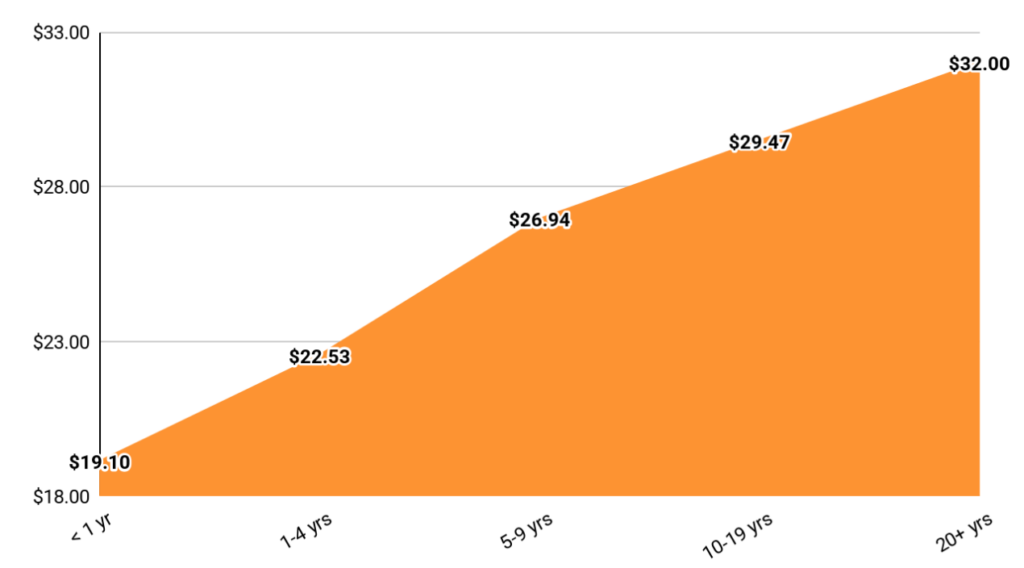
As you gain experience, and even additional certifications, you can expect your wages to increase. Payscale maps out the projected salary over the course of an HVAC career, from entry-level at $19.10/hour to experienced HVAC technicians at $32/hour.2 This can grow even more as you add certifications onto your experience, such as the EPA 608 certification and North American Technician Excellence (NATE) certification, which can bring average annual salaries of $71,000 and $77,000, respectively.5,6 Over time, you may even consider starting your own HVAC company, which can bring even more opportunities for growth.
Factors That Influence HVAC Technician Salary
Certifications and Licensing
As mentioned above, licensing can have a huge impact on an HVAC technician’s salary, as they showcase your training and skills in the latest technology and procedures, inspiring confidence in potential employers and customers. Besides the EPA and NATE certifications, other popular ones include HVAC Excellence, Refrigeration Service Engineers Society (RSES), The American Society of Heating, Refrigerating, and Air Conditioning Engineers (ASHRAE), and more.
Location
Where you live, particularly its climate and populace, can also impact both demand for your work and how much you get paid for it. Some areas may call for more heating or air conditioning, some may be more densely populated and thus have more potential customers, and some may have a higher amount of buildings that require specialized knowledge, such as plants or factories.
Overtime and Emergency Calls
In addition to the base pay, HVAC technicians also earn more when they make emergency calls and work overtime. According to Indeed, the average overtime pay per year in the HVAC industry is $6,750.7 You’ll want to keep in mind, though, that this will also mean potentially trading off some work-life balance due to longer and more irregular hours.
Union Membership
Unions act as intermediaries between employees and employers, and they can be a crucial link in their relations. While you do have to pay membership fees and abide by union rules, they can also help with wage and benefit increases, safety, and job security.
Specialization
Certain specializations can make you more in-demand in the field, often requiring additional training and certifications. For example, residential technicians earn an average HVAC salary $23.65/hour, whereas commercial technicians bring in around $28.56/hour.8,9 You might then also specialize in systems design, green energy, automation, sales, and beyond.
Company
Finally, one of the biggest factors in salary is which company you work for. It might be a small business with a more limited pay range and available benefits, or it could be a larger company with the ability to pay more and to offer more benefits. When evaluating potential employers, be sure to take into account not just base pay but also whether they offer healthcare, retirement accounts, paid time off, education benefits, and more.
How to Increase Your Salary as an HVAC Technician
As you can see, there are a number of ways you can increase your HVAC salary. These include:
- Obtaining advanced certification and licensing
- Specializing in high-paying areas within the field
- Pursuing supervisory or management roles
- Working overtime or answering emergency calls
- Starting your own business
- Continuing your education to keep up to date with the latest technologies and practices
HVAC Training Costs
As with many other careers, becoming an HVAC technician requires an upfront investment in paying for training before you start earning your salary. Fortunately, there are several education options that take both less time and money than traditional education like college or university.
Typically employers are looking for technicians with postsecondary education from a trade school or community college. Depending on which path you choose, it can take several months or up to two years to receive your certificate or associate’s degree. The cost will also vary significantly depending on which type of program you choose, the school and its location, any specializations you pursue, and more. Certificate programs at trade schools can cost anywhere from less than $2,000 up to around $15,000, whereas an associate’s degree can reach as high as $35,000.10
Those are the only options to enter the HVAC field, though. Many people also pursue an apprenticeship, in which you learn through on-the-job training under experienced professionals. While this path does take the longest and may have stricter eligibility requirements, it is much more cost-effective. The registration fee ranges from $500 to $2,000, but it also includes pay, with first-year apprentices earning around $15 to $18 per hour.10
Then, you’ll also want to consider other factors that will impact the cost of entry. These include the fees for any certification exams you may need to take throughout your career, as well as the purchase and maintenance of tools and equipment.
Over time, however, you’ll likely find that the costs of becoming an HVAC technician are far surpassed by the potential pay. Though the rise of automation, which we’ve seen across several industries, may create uncertainty in the market and require adaptation from employers and technicians, with an 8% projected job growth rate and a median annual salary of almost $60,000, the outlook for those who’ve invested in their training remains positive.3,1
Final Thoughts
Between the low cost of entry, higher than average projected job growth, and the potential to advance in your field and earn up to around a six-figure salary, it’s no wonder that HVAC remains a viable career path for many people. Whether you choose a trade school, community college, or apprenticeship; whether you pursue residential, commercial, or industrial HVAC work; or whether you’re passionate about green energy innovations, system design, business ownership, and more; you can find the right fit for you and your goals.
Check out the HVAC employment opportunities in your area to gauge their availability, salary offerings, and requirements. Read more about certifications and which ones you would need to obtain (or even simply want to attain). Then, start planning out your career path. Once you have a road map, you can find the education and training options that are right for you.
Frequently-Asked Questions (FAQ)
How much does an entry-level HVAC tech make in my state?
The salary of an entry-level HVAC technician will vary widely between states. While a tech in Alaska can expect a median wage of $83,660, in West Virginia the median pay is $46,040.4 You can view state-by-state salary and employment data from the Bureau of Labor Statistics’s Occupational Employment and Wage Statistics (OEWS) Maps.
Do certifications like EPA and NATE increase pay significantly?
Certifications do increase pay, but their impact will depend on the specific certification and how in-demand the skills are. Payscale notes that the average salaries for techs with the EPA and NATE certifications in particular is $71,000 and $77,000, respectively.5,6
What is the difference in pay for residential vs commercial work?

"Career Karma entered my life when I needed it most and quickly helped me match with a bootcamp. Two months after graduating, I found my dream job that aligned with my values and goals in life!"
Chat for Free with Your AI Career AdvisorBecause of the different scopes of the work, commercial techs tend to earn a higher salary than residential. Whereas residential technicians earn on average a base pay of $53,874, commercial workers bring in around $67,460.8,9
Can self-employment or owning an HVAC business greatly increase earnings?
While the data varies significantly based on location and each individual company, most sources point to having your own HVAC business as increasing salary—anywhere from $60,000 to more than $150,000. Nevertheless, you’ll also want to remember that this will come with a significant upfront cost, and will require plenty of business knowledge and constant upkeep in order to succeed. So you’ll want to be sure that ownership is something you really want to pursue.
Are there large regional pay differences for HVAC techs?
Yes, there are regional pay differences. The need for heating and air conditioning varies by region, as well as the density of a population needing HVAC installation or maintenance, and the presence of commercial or industrial buildings that need a large number of specialized, skilled technicians.
Sources
2https://www.payscale.com/research/US/Job=HVAC_Service_Technician/Hourly_Rate
7https://www.indeed.com/career/hvac-technician/salaries/New-York–NY
8https://www.payscale.com/research/US/Job=HVAC_Service_Technician/Hourly_Rate/06877337/Residential
9https://www.payscale.com/research/US/Job=HVAC_Service_Technician/Hourly_Rate/139a17f4/Commercial
10https://www.housecallpro.com/resources/hvac-school-training-costs/
10https://www.sharewillow.com/blog/hvac-business-owner-salary